
Living on the coast brings incredible views and lovely ocean breezes, but it also means dealing with a brutal environment for your house. Your roof drainage system sits right on the front lines against the elements. If you want to avoid expensive structural repairs, keeping your drainage in top shape is an absolute must.
Proper gutter maintenance prevents water from backing up under your shingles or eroding the ground around your concrete slab. It takes a specific strategy to combat the unique challenges of a maritime climate.
Why does salt air require you to rinse your gutters?
While most homeowners know they need to scoop out fallen leaves, coastal residents have to deal with an invisible enemy: airborne salt. As wind blows off the ocean, it carries microscopic salt crystals that settle inside your channels.
When morning dew or high humidity mixes with these salt deposits, it triggers rapid oxidation. According to material science studies on coastal metal weathering, salt accumulations dramatically accelerate pitting corrosion on metal surfaces, causing untreated metals to lose up to 7% of their mass in just a few months.
- Salt crusts trap moisture directly against the metal liner, speeding up rust.
- Corroded metal becomes brittle, causing brackets to sag and pull away from your house.
- Regular freshwater flushing dissolves these salt crusts before they can eat through the finish.
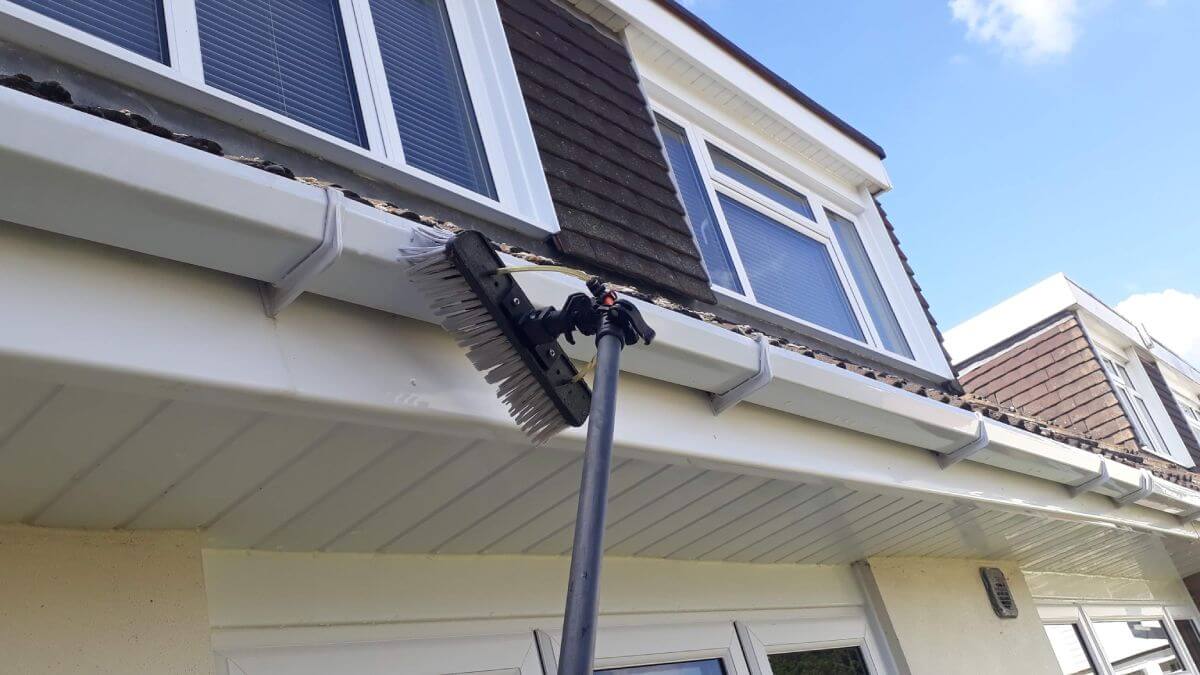
Taking a standard garden hose and thoroughly spraying down the inside and outside of your channels every few months removes these corrosive deposits and extends the lifespan of your system.
How do regional trees complicate your drainage layout?
Coastal regions are famous for beautiful, sweeping live oaks, grand magnolias, and tall pines. While these trees provide incredible shade and charm, they also drop debris constantly throughout the year.
Pine needles, heavy oak leaves, and Spanish moss blow onto your roof and wash straight into your channels during storms. Once this organic debris clumps together, it creates a thick, sponge-like dam. This trapped debris holds salty moisture against your roofline and blocks the flow of water. During a sudden downpour, the blocked water spills over the sides, digging deep trenches into your sandy coastal soil and flooding your foundation zone.
What are the recommended local solutions for coastal property protection?
Standard neighborhood maintenance habits are not always enough to handle heavy coastal elements. To keep your home fully protected, you should implement these specific local upgrades:
- Regular Soft-Wash Rinsing: Use low-pressure freshwater rinses at least twice a year to wash away dried salt films and sticky tree sap without loosening the hangers.
- Micro-Mesh Stainless Steel Guards: Installing high-quality gutter guards keeps tiny pine needles and oak tassels completely out of your channels while letting heavy sheets of water pass through smoothly.
- Marine-Grade Component Upgrades: If you are replacing parts, choose seamless aluminum or solid copper with stainless steel fasteners, as these materials naturally resist chloride pitting much better than seamed steel.
- Downspout Extension Tuning: Ensure your downspouts empty onto splash blocks or connect to underground pipes that guide water far away from volatile coastal sands.
According to regional watershed guides from the University of Georgia Marine Extension and Georgia Sea Grant, routing roof runoff directly into dedicated green infrastructure, like rain gardens or bioswales, helps slow down stormwater velocity and prevents local flooding around your property.

How often should you check your hardware fasteners?
Strong coastal winds and tropical storms put intense physical pressure on your home. Heavy rain fills channels to the brim, adding hundreds of pounds of extra weight to your fascia boards.
You should inspect your gutter system‘s hanging brackets after every major storm event. Look for loose screws, gaps between the channel and your roofline, or downspouts that have vibrated loose from the wall. Catching a loose screw early prevents the entire channel from collapsing during the next heavy storm.
Is Your Coastal Home Fully Protected From the Elements?
Keeping up with clearing debris, flushing out salt crusts, and checking brackets can be an exhausting weekend chore. If you want to make sure your home is fully prepared to handle the next tropical system or heavy summer storm without taking on water damage, our experienced team is here to step in. At Gutter Time, we specialize in heavy-duty coastal upgrades, professional cleanings, and high-performance seamless installations designed to withstand the toughest coastal conditions. Call Gutter Time today at (904) 528-1476 to book your comprehensive system inspection and get your free property estimate.