
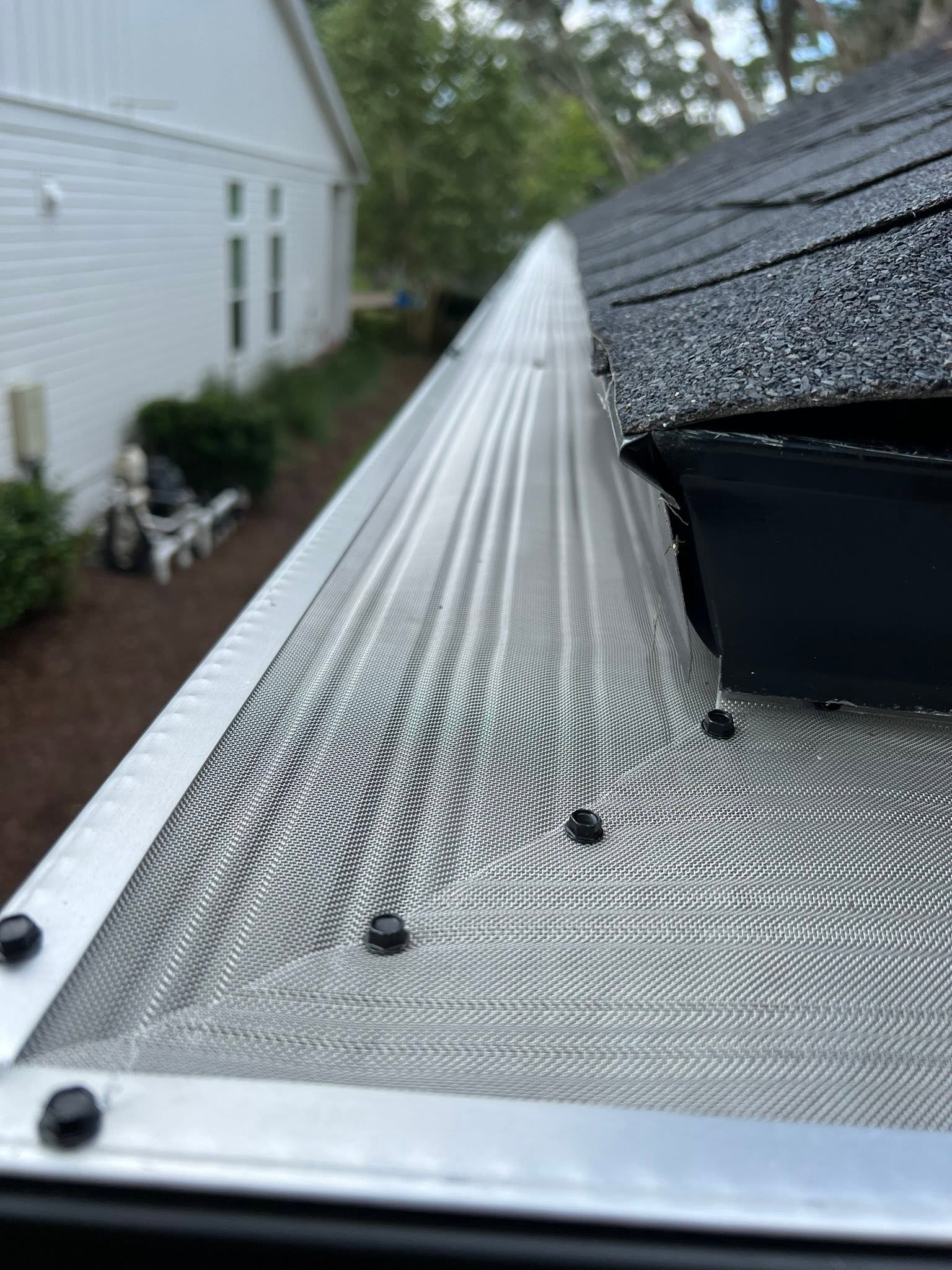
Your home’s gutter system has one primary job: collecting rainwater off your roof and routing it safely away from your house. But living in a vibrant coastal region like St. Johns County, nature constantly works against that system. Leaves, oak tassels, twigs, and pine needles build up in your gutters, blocking the channel and restricting water flow. When water can’t move freely, it backs up and threatens your home.
That is where gutter protection comes in. A quality gutter guard acts as a physical barrier over your gutter system. It lets heavy rainwater pour through while keeping larger yard debris outside where it belongs. Understanding how these systems work can save you time, money, and plenty of home maintenance headaches, especially given our local climate.
Why Do Gutters Get Clogged?
Gutters collect everything that falls onto your roof, and without a protective shield, that debris builds up quickly.
Leaves and Small Branches
Leaves and twigs are the most common culprits. During seasonal sheds or after a sudden windy afternoon, foliage lands on your shingles and slides straight down into your gutters. Over time, these leaves pile up, mat together when wet, and form a dense plug that completely blocks water from reaching your downspouts.
Pine Needles and Seeds
Pine needles and tiny plant seeds are notoriously tough on home drainage. Because pine needles are slender, they slip right through standard gap-style covers. Once inside, they weave together like a mat, trapping pollen and fine dirt until water can no longer pass through.
Dirt and Organic Debris
It is not just large leaves you have to worry about. Dust, tree pollen, bird droppings, and loose asphalt roof granules wash down your shingles every time it rains. This fine grit settles along the bottom of the gutter trough, forming a heavy, muddy sludge that slows down water runoff.
Uncleaned drainage channels and roof runoffs contribute significantly to localized standing water and localized soil erosion.
Storm Debris
Severe weather pushes debris around fast. High winds easily strip small branches, Spanish moss, and palm fronds from mature trees, scattering them across nearby rooftops. A single strong thunderstorm can dump enough debris onto your roof to instantly block an unprotected gutter line.

What Are Gutter Guards?
Gutter guards are protective covers, screens, or inserts installed directly over your existing gutter troughs. Their main purpose is straightforward: let rainwater enter the gutter system while keeping leaves, needles, and debris out. Different designs handle foliage differently, ranging from basic drop-in plastic screens to high-grade stainless steel micro-mesh.
How Gutter Guards Work
Rainwater flows down your roof surface and hits the top surface of the guard. The water passes through tiny openings or follows specialized curved edges straight into the gutter channel. Meanwhile, leaves, twigs, and larger debris are caught on top of the shield. Once the storm passes, breezes dry the trapped debris and blow much of it harmlessly to the ground.
How Do Gutter Guards Help Prevent Clogs?
Adding protective covers changes how your drainage system manages incoming runoff.
Keep Large Debris Out
By blocking leaves, oak tassels, and twigs at the roofline, micro-mesh covers prevent the physical materials that form clogs from reaching the gutter trough.
Help Maintain Water Flow
When the main channel stays clear, water moves swiftly toward your downspouts. Proper water velocity prevents small bits of dirt and roof sand from settling and turning into packed sludge.
Reduce the Need for Frequent Cleaning
Without guards, many coastal homeowners clean their gutters four to six times a year. Quality gutter leaf guards drastically reduce that chore. While no system is 100% self-cleaning, guards turn a filthy, multi-hour gutter scraping job into a quick visual check.
Why Are Gutter Guards Useful in Nocatee, FL?
Our region experiences unique weather patterns that make functional gutters essential. Data from the National Oceanic and Atmospheric Administration shows that Northeast Florida receives over 50 inches of rainfall annually, with much of it falling during short, intense summer downpours.
If you are looking at investing in a gutter guard installation in Nocatee, FL, local environmental factors make a strong case for protection:
- Frequent, Heavy Downpours: Rainy seasons bring sudden, intense rainfall that requires fully clear gutters to handle high volume.
- Dense Local Foliage: Neighborhoods around Nocatee feature majestic live oaks, loblolly pines, and dense palmettos that drop debris year-round.
- Expansive Rooflines: Modern homes in the area often feature sprawling roof designs that collect huge amounts of water and channel it into specific gutter runs.
Installing reliable gutter guards in Nocatee, FL, helps your home handle tropical downpours without overflowing.

What Problems Can Clogged Gutters Cause?
Ignoring clogged gutters leads to costly structural damage over time.
Overflowing Gutters
When water cannot flow past a debris blockage, it spills right over the front and back edges of the gutter, cascading down your walls like a waterfall.
Water Around the Home
Continuous overflow drops directly next to your foundation. Over time, this leads to soil erosion, ruined flowerbeds, cracks in concrete walkways, and dangerous water pooling around foundation slabs.
Sagging or Damaged Gutters
Wet leaves are heavy. A 10-foot section of clogged gutter full of water and soaked debris can weigh well over 100 pounds. This excessive weight pulls hangers away from the fascia board, causing the gutter line to sag, bend, or pull off the house entirely.
Downspout Blockages
Debris that travels past the top opening often lodges in vertical downspout elbows. Clearing a blocked downspout is far more difficult than clearing a flat gutter channel.
How Do They Work by Design?
Different styles of gutter protection use different physics principles to keep water flowing:
- Mesh and Screens: Fine metal or stainless steel micro-mesh features tiny holes that block even fine pine needles and sand while drawing water through.
- Reverse Curve (Surface Tension) Systems: These solid metal covers use liquid adhesion to guide water around a rounded front edge and into the gutter, while leaves slide right off the nose.
- Brushes and Foams: Brush inserts sit inside the gutter to catch large leaves on bristles, while porous foam fills the channel to block solids while water filters through.
Can Gutter Guards Really Help Prevent Clogs?
Gutter guards are an effective, reliable way to keep leaves and outdoor debris out of your roof drainage system. While no guard eliminates the need for basic periodic home maintenance, choosing the right guard reduces clogs, protects your home’s foundation, and saves you from climbing dangerous ladders year-round.
If you want complete peace of mind during the next big storm, let a professional inspect your home’s setup. Contact Gutter Time today at (904) 528-1476 to schedule your comprehensive home evaluation. Ask our local team about our Gutter Clean Pro system, backed by a lifetime clog-free warranty, and keep your home protected year-round!