
North Florida looks calm most of the year, but its weather is tough on commercial buildings. Hot, humid summers bring sudden downpours, and hurricane season adds long, windy storms. In cities like Yulee, heavy rain is common, with around 52 inches of rain a year and most of it falling from late spring through early fall. For businesses, this kind of weather makes commercial gutter drainage a critical part of protecting roofs, walls, and foundations.
How Does North Florida’s Weather Put Extra Stress on Commercial Gutters?
North Florida has a humid subtropical climate, which means hot, wet summers and milder, drier winters. Short but intense thunderstorms are common from May through September, often dropping a lot of rain in a short time.
On top of that, Florida sits in the main path of Atlantic hurricanes. The National Oceanic and Atmospheric Administration (NOAA) notes that an average Atlantic season now brings about 14 named storms, 7 hurricanes, and 3 major hurricanes. The Florida Climate Center explains that hurricane season runs from June 1 to November 30, with the highest risk from mid‑August to late October.
Strong rain and wind put huge pressure on commercial gutters. A system that works fine in a drier state can quickly overflow or pull loose in North Florida’s climate.
Why Does Intense Rainfall Matter for Your Roof?
Many commercial buildings in North Florida have large, low‑ slopes or flat roofs. When gutters clog or are undersized, water cannot drain fast enough. That causes:
- Ponding on the roof: Standing water adds thousands of pounds of extra weight to roof structures over time. This can lead to sagging, leaks, and in extreme cases, structural failure.
- Water around the foundation: When gutters overflow, water spills straight down to the base of the building. Over time, this can wash away soil, crack slabs, and let water seep into basements or ground‑level spaces.
- Interior leaks: Poor drainage lets water move behind walls, into ceilings, and around electrical systems. Repairs can be expensive and may shut down parts of your business until they are done.
What Damage Can Poor Gutter Drainage Cause Your Commercial Property in North Florida?
Water damage is not just about stains on ceiling tiles. It also affects health, safety, and long‑term costs.
- Mold and air quality problems: The U.S. Environmental Protection Agency (EPA) reports that mold can irritate eyes, skin, nose, throat, and lungs, even in people who are not allergic. A large review funded by the National Institutes of Health (NIH) found that damp and moldy buildings raise asthma risks by about 30 to 50 percent.
At work, the Centers for Disease Control and Prevention (CDC) notes that moisture‑damaged materials can release irritating chemicals, and damp spaces attract pests like cockroaches and rodents.
That means a simple gutter issue can grow into a serious health and liability problem. - Higher repair and insurance costs: Replacing damaged drywall, flooring, wiring, or inventory after leaks is costly. Repeated water claims can also raise insurance premiums.
How Should Commercial Gutters Be Designed for North Florida Conditions?
Because of North Florida’s intense rain, commercial gutters should be treated as part of your building’s safety system, not just an add‑on.
Key design points include:
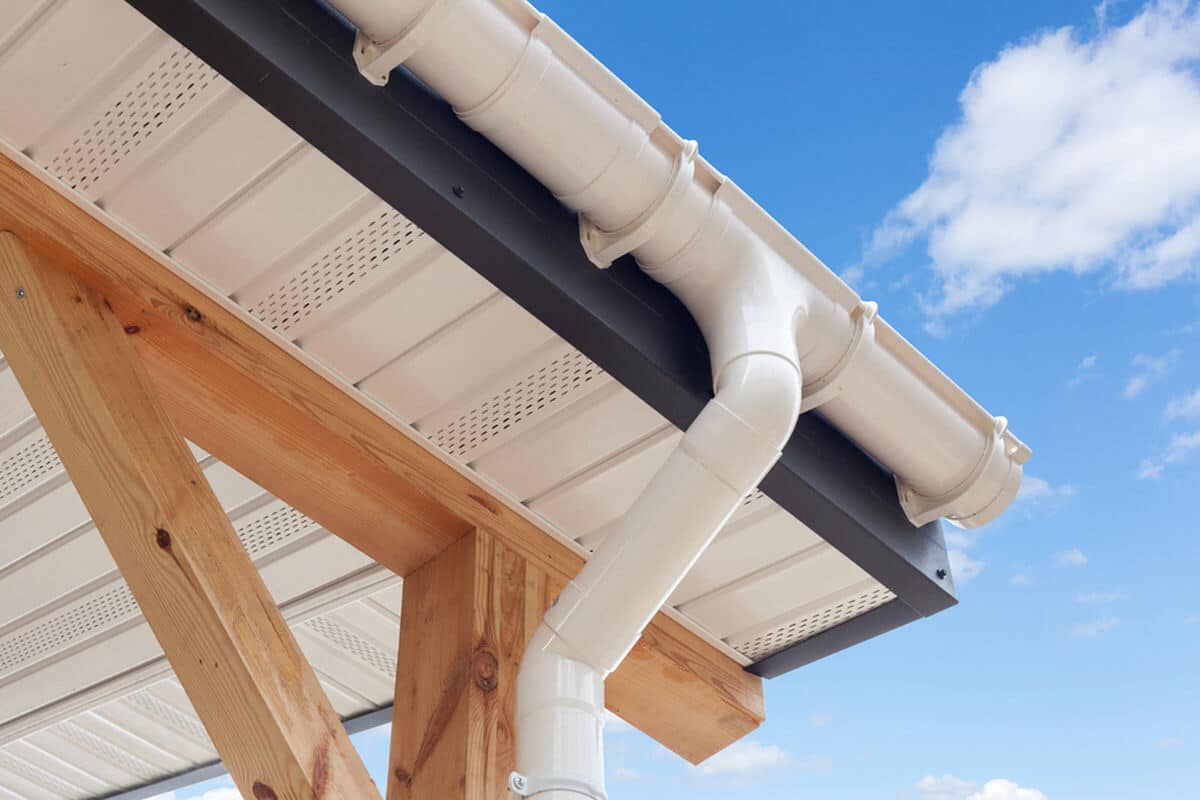
- Right size and style: Larger K‑style gutters and wider downspouts help move heavy rainfall away from the roof quickly.
- Proper slope: Gutters need a slight tilt toward the downspouts so water does not sit and rust the metal. Many pros use a small drop for every 10 feet of gutter length to keep water flowing smoothly.
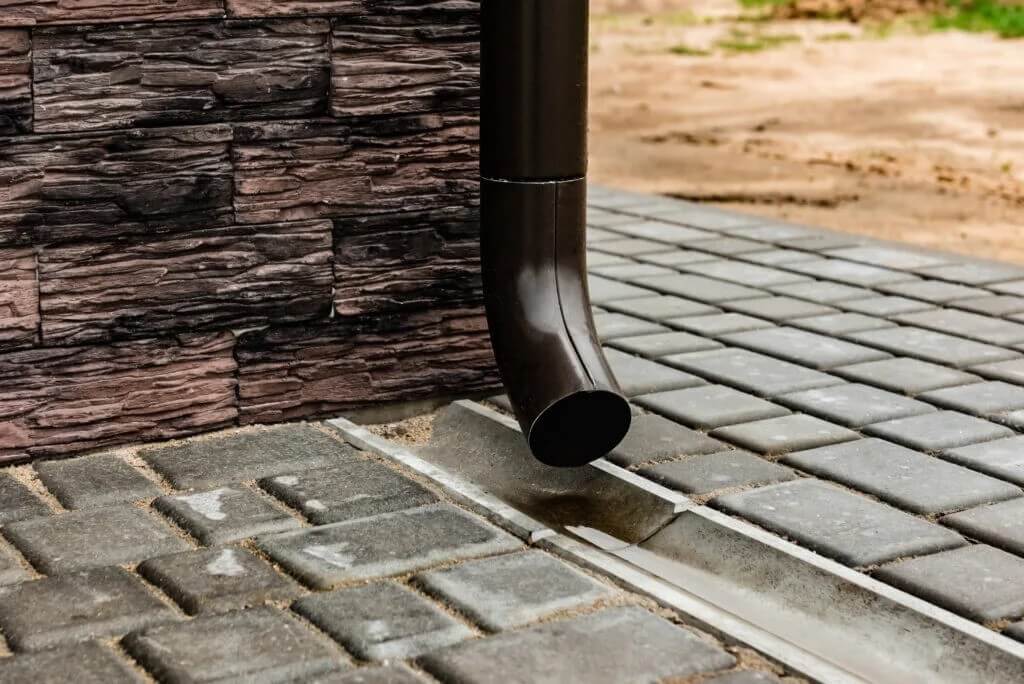
- Smart downspout placement: Downspouts should be spaced often enough to handle big storms and should empty onto splash blocks, into drain lines, or away from the building by several feet. This protects walkways and foundations.
- Hurricane‑ready fastening: In a storm, high winds can pull loose poorly installed gutters. Strong hangers, sealed joints, and secure connections to downspouts help your system stay in place during tropical storms and hurricanes.
How Often Should North Florida Businesses Maintain Their Gutters?
In North Florida, gutters on commercial buildings should be:
Inspected and cleaned at least twice a year
A good schedule is once in late spring, before the heart of hurricane season, and once in late fall, after leaves and debris have dropped.
Checked after major storms
After a tropical storm or hurricane, look for sagging sections, loose hangers, and blocked downspouts.
Regular care is usually far cheaper than repairing a soaked roof deck or a cracked foundation.
How Can Gutter Time Help Your North Florida Business Stay Protected?
Commercial gutter drainage is not something to ignore in our climate. A well‑designed and well‑maintained system helps protect your roof, walls, foundation, and the people who work inside.
Ready to protect your building before the next big rain? Call Gutter Time at (904) 528-1476 today to schedule your commercial gutter inspection and keep your property safe and dry.