
Hidden gutter damage is easy to miss until it turns into stained walls, soft spots in the yard, or a wet crawl space. That risk is higher here in coastal southeast Georgia, where warm, humid air and frequent storms keep water around your home for much of the year. Climate records show the Kingsland area receives roughly 45 to 50 inches of rain every year, spread across many stormy days.
In a wet place like this, your gutters have a big job. If they fail quietly, water can sneak behind siding, rot wood, and erode the soil that protects your foundation.
Why Do Kingsland Gutters Take Such A Beating?
Kingsland sits in the coastal plain of southeast Georgia, close to tidal rivers and marshes in Camden County. The county notes that this low lying area often floods from rivers, heavy rain, and hurricanes that push storm surge inland.
A national flood risk report also finds that about 55 percent of properties in Camden County have some chance of flooding over the next 30 years. That means a lot of homes see hard, repeated rain on roofs and yards.
High humidity and salty coastal air speed up rust on metal gutters and fasteners. Wind from tropical systems can blow pine straw, leaves, and small branches straight into open gutters. When these clog, water spills over the edge or backs up behind the gutter, where damage is harder to see.
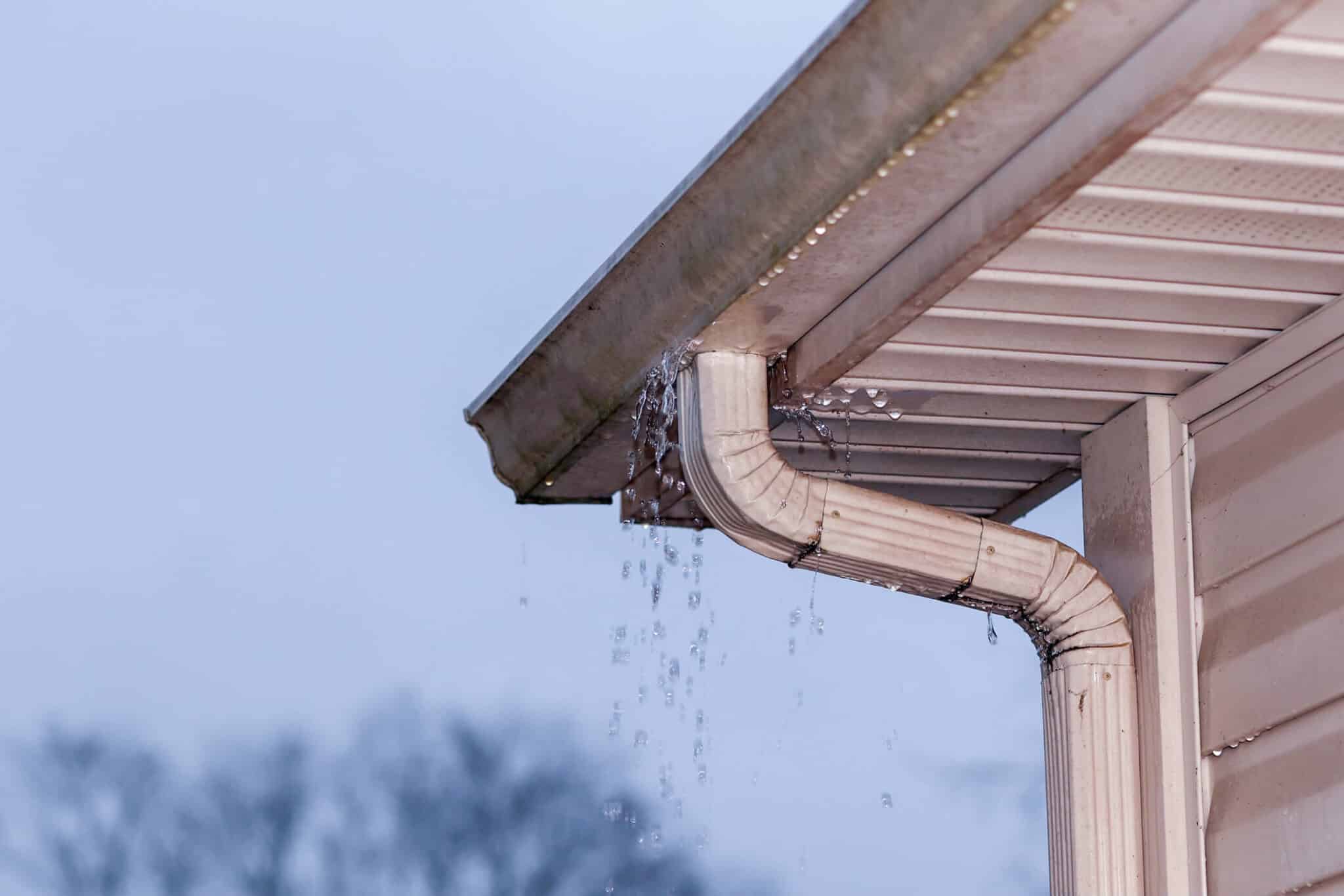
What Are The Hidden Signs Of Gutter Damage Outside Your Home?
You may not see holes in the gutter from the ground, but you can see what the water is doing. Walk around your home after a storm and look for these quiet warning signs:
- Do you see dark streaks on siding or brick?
Brown or rust colored trails under gutter joints mean water is leaking from seams. Over time, this can stain siding and allow moisture to get behind it. - Are any gutter sections sagging or pulling away?
Gutters that dip in the middle or separate from the fascia are often full of wet debris. The extra weight can loosen screws and nails and open a gap where water can flow behind the gutter. - Is soil or mulch washed away near your foundation?
Soggy low spots, exposed roots, or bare lines under the drip edge show that downspouts are not sending water far enough from the house. Poor surface drainage also increases flood risk in a county that already sees frequent water issues. - Do you see peeling paint or green growth on trim boards?
Bubbling paint, mildew, or soft wood near the roof edge suggests that water is running behind the gutter and soaking the fascia board. - Is there rust, chalky residue, or pitting on the metal?
In a coastal climate, salt and moisture speed up corrosion. Flaking metal or white, powdery streaks are signs the gutter material is thinning and may soon leak. - Are plants growing from the gutter troughs?
Weeds, tiny trees, or thick moss in the gutters mean long term standing water and trapped debris. This usually goes along with hidden rot on the wood behind the gutter.
How Can Indoor Clues Reveal Hidden Gutter Problems?
Even if the outside looks fine, the inside of your home can tell another story:
- Do you see water stains on ceilings near exterior walls?
Tan or brown rings at ceiling edges can appear when overflowing gutters push water back under shingles. - Does your attic or crawl space smell musty after rain?
A healthy attic should be dry. Moist insulation or dark stains on the roof deck near the eaves can come from constant gutter overflow. - Are inside baseboards or lower drywall showing soft spots or peeling paint?
This may mean water is running down inside the wall from leaks at the roof edge.
Healthy home guides from several counties remind owners to keep gutters discharging away from the building and to check attics for signs of roof leaks, since both issues often go together.

How Can You Safely Inspect Your Gutters?
You do not always need a ladder to spot trouble. Try these simple checks:
- Watch the gutters during a steady rain. If water pours over the front, there is a clog or a slope problem.
- After the storm, check where each downspout lets out. National programs like EPA’s Indoor airPLUS advise sending water as far from the foundation as is practical, not just a few inches away.
- Use binoculars from the ground to look for dips, loose brackets, or plant growth.
- Now and then, look inside the gutters from a safe, low ladder to check for piles of roof shingle granules or thick sludge.
A gutter care guide from the U.S. General Services Administration suggests cleaning gutters at least twice a year, typically in late spring and late fall. In a rainy place like Kingsland with lots of trees, you may need even more frequent cleanings.
When Should You Call Gutter Time?
If you notice sagging gutters, peeling paint near the roof, streaks on your siding, or soft, washed out soil near the foundation, it is time to bring in a professional.
Gutter Time can inspect your full gutter system, from roof edge to downspouts, around homes across Kingsland and the rest of Camden County. We can find hidden leaks, rotted fascia boards, and small issues before they turn into big repair bills.
Call Gutter Time at (904) 528-1476 today to schedule a gutter inspection and keep your Kingsland GA home protected during the next heavy rain.